
Fashion is obsessed with Doll Dressing. Excerpted from Doll Dealbook.
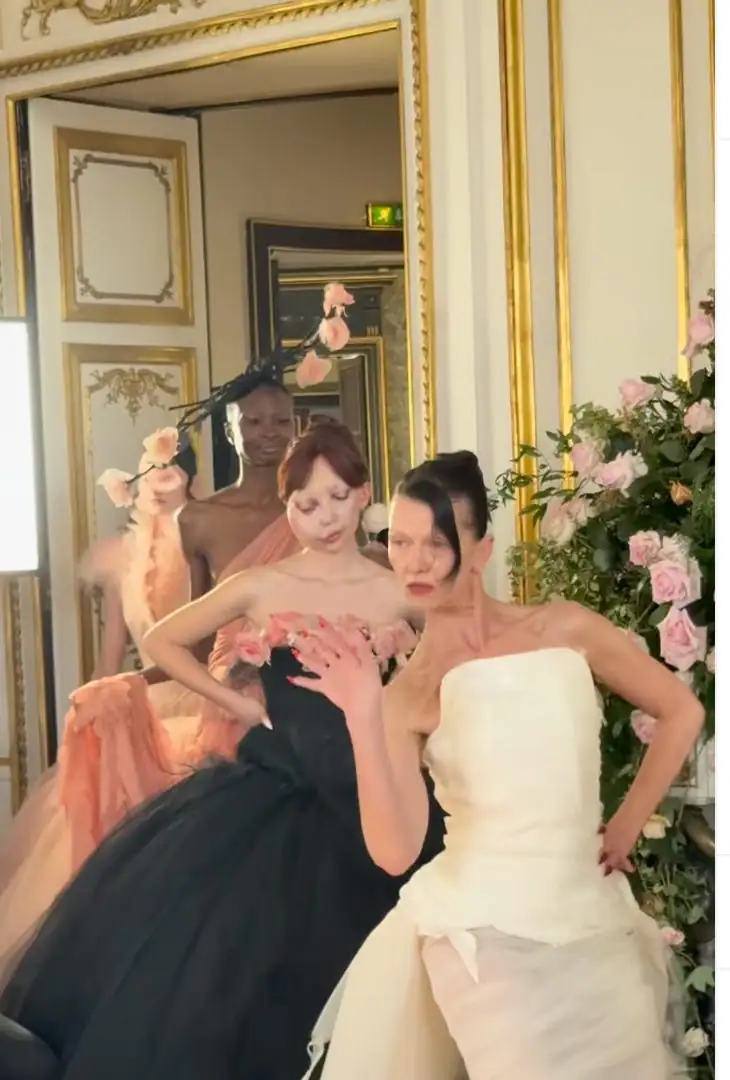
It started with a whisper. Of bows, of coquette culture and of shiny pink ribbons. And then it transformed into something bigger: puff sleeves, oversize babydoll dresses and the total celebration and reclamation of girlhood. 2023 was firmly the year of doll dressing and embracing total femininity, and for many, it served as a form of fashion therapy. For obvious reasons doll dressing is at the heart of what Doll Dealbook represents. At this point, it’s wild to me that I was writing about the resurgence and history of the bow in 2021 and writing about the obsessive doll culture starting to take shape in 2022. In 2025, clearly, doll-like fantasy fashion is here to stay.
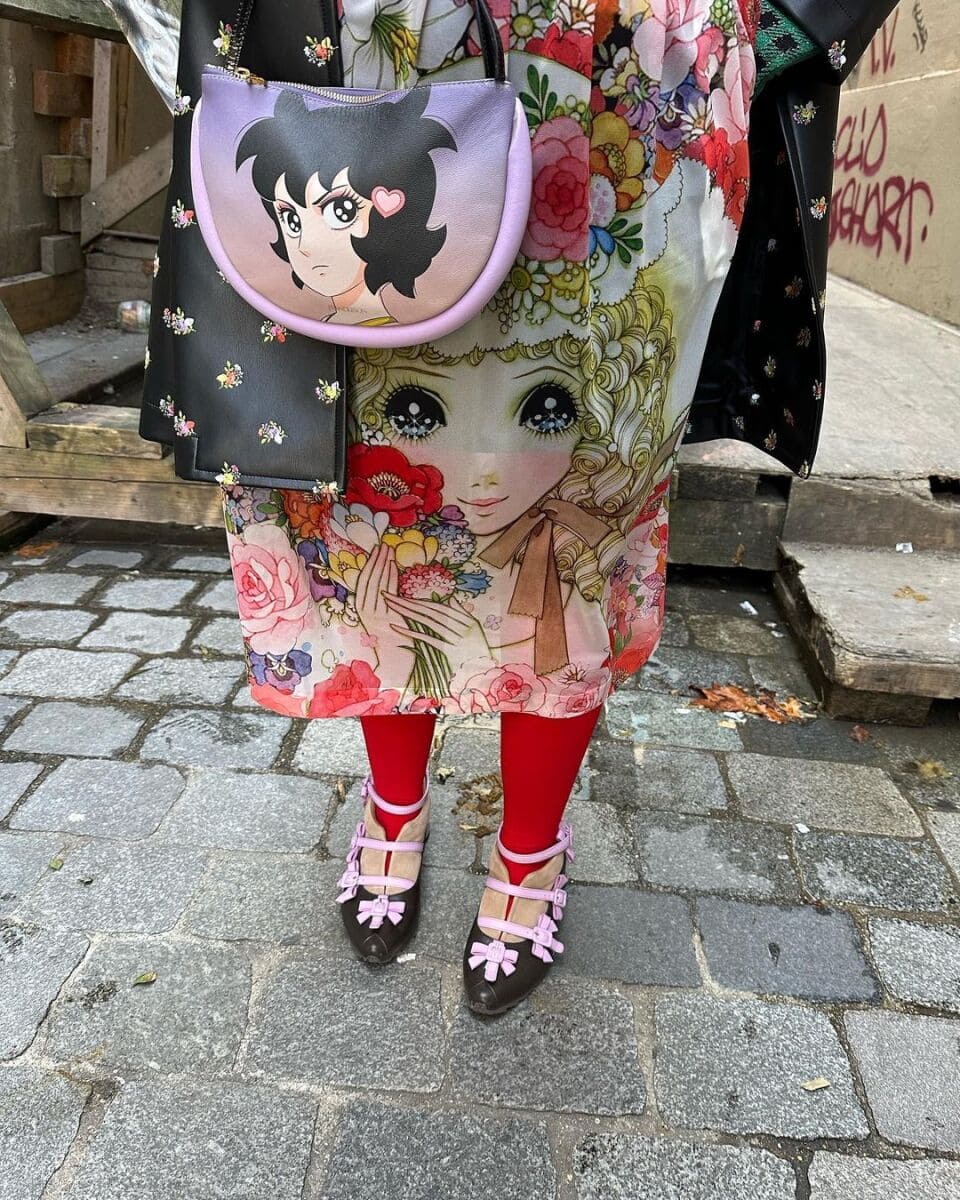
Doll dressing is not about being small, tame or meek. It’s rather the opposite; standing strong as a formidable echo of girlhood. Doll dressing says girls are strong and no less than women or men. Doll dressing makes up for the nostalgia of girlhood left behind; the little mary jane shoes of our former lives, the pinafore dresses we may or may not have been forced into. But it’s also been heavily represented as one of the biggest underlying themes this year in fashion, for whatever reason.
When I interviewed Yohji Yamamoto earlier this year, he told me he was still working toward his goal: of shifting the narrative of clothing for women. “Next collection for women, I will try a 17th-century or 18th-century European concept,” he said. “I hate it. I want to change it, because at that moment, women and girls were treated as dolls for men. I don’t like it.”
Victorian doll dresses, white tights, heart-shaped lockets; it’s everywhere. The difference in doll dressing of today of course, is that it’s not about being ultra-feminine through the male gaze or for men (like Yamamoto spoke about). But if you’re here, you probably already know that. It’s less about that primitive view and more about what modern girlhood looks like in the form of fashion today.
The history of doll dressing is an interesting one—it dates back centuries as women’s clothing mirrored doll clothing and vice versa. “Fashion dolls” (also called “Pandora dolls”) were little dolls used as early as the 14th century to show fashion details in miniature form. Seamstresses, tailors, shop owners and others in fashion industry used them to display the trends of the time. European royal courts in the 16th century used them to show the minute details of clothing, to be replicated by seamstresses as well as painters. Women’s clothes were literally modeled off of doll clothes.
Fast forward to the early to mid 2000s, when Tumblr culture was top tier. Do you remember the living doll movement? Dakota Rose and Venus Angelic (along with others) dressed up and did their hair and makeup as if they were real life dolls. The standard of “perfection” they were striving for made the trend less fun and less inclusive for obvious reasons. But both dressed in outfits inspired by school girl looks and Lolita with lots of bows. It was a short-lived trend. But also heavily inspired by the original Lolita culture in Japan, which existed as early as the 1970s in Tokyo. Angelic Pretty, the original Lolita shop, opened in Laforet in Harajuku, Tokyo in 1979, selling frilly, pretty dresses designed to look like things storybook princesses would wear.
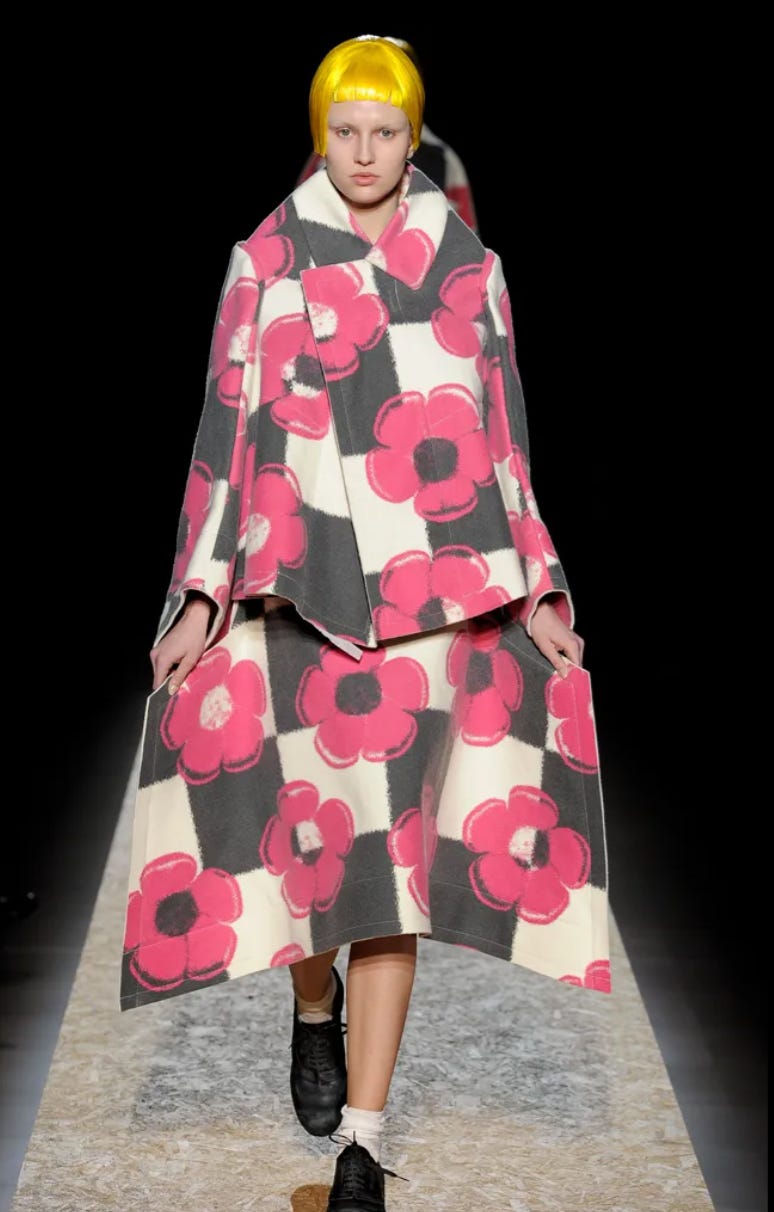
I’ve always been really interested in how designers like Rei Kawakubo and Martin Margiela have re-interpreted the notion of doll dressing throughout time. Obviously Kawakubo rarely speaks about her work, but in 2012, her famous 2D collection for Comme Des Garçons was perfectly spot on as high-fashion versions of paper dolls (just missing the white paper tabs). “The future’s in two dimensions,” was the definition of the collection.
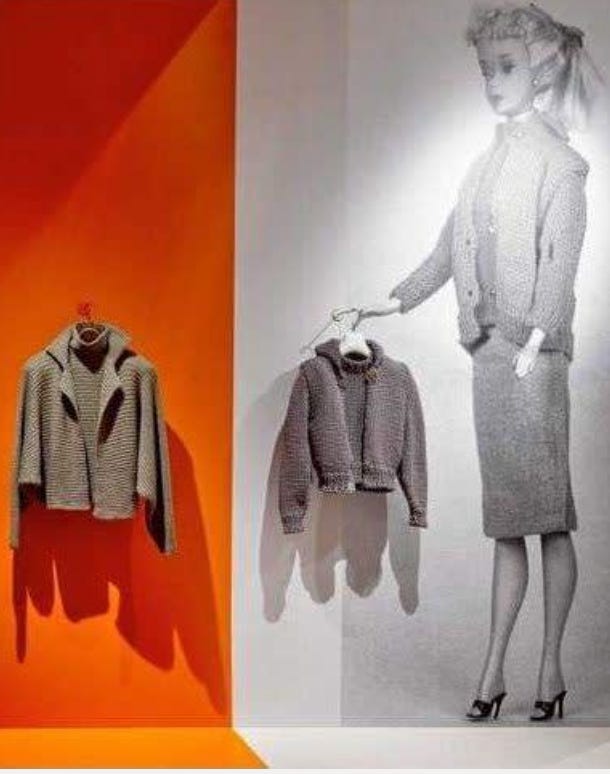
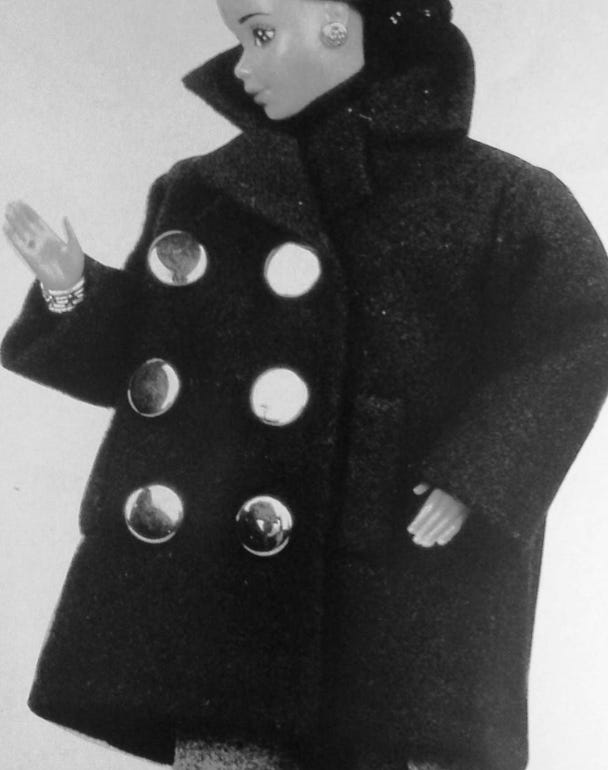
Many will remember Margiela’s iconic fall/winter 1994–95 collection, comprised of what he called “Clothing reproduced from a doll’s wardrobe”. Taking cardigan with big buttons, oversize coats, and all, blown up life-size, yet keeping the odd disproportions of Barbie’s body in mind. It was the start of breaking down how he looked at clothes and the perceivable body.
For Moschino’s fall 2017 collection, Jeremy Scott turned out gown after gown in two-dimensional form, along with the signature paper doll tabs. It was a commentary on seeing the world in 2D, due to increasingly ubiquitous screen time.
Maybe dressing like dolls is a reaction to a overcomplicated world after all.
Leave a Comment