
A love letter to Elzac’s Victims of Fashion: iconic vintage jewelry lore in brooch form.
Somehow, someway, about a decade ago, I became aware of Elzac’s 1940s Victims of Fashion brooches and I bought an incredible example replete with lemon yellow lucite and bright red lips. For as long as I can remember, I’ve worn her on a baby-sized strand of pearls that used to belong to my mother. Done in saccharine shades of bubbly lucite and painted pale ceramic with a slick layer of shiny acrylic that resembles the texture of hard candy, these ladies often come outfitted in bright red lipstick, blue or purple eyeshadow, heavy mascara and all kinds of various camp-y hats constructed of found pieces of fabric, plastic, twill, wood and assorted sewing box trims. They sometimes pop up at flea markets, where their history has been long lost. Their faces are incredibly expressive and cartoonish, and the fact that each one has a different kind of outfit gives them an almost doll dressing feeling. That’s part of the reason why I’ve always loved them.
We are a reader-supported publication. We don’t run ads so you get the best content possible. Sign up for $5/month to show support and get access to exclusive stories.
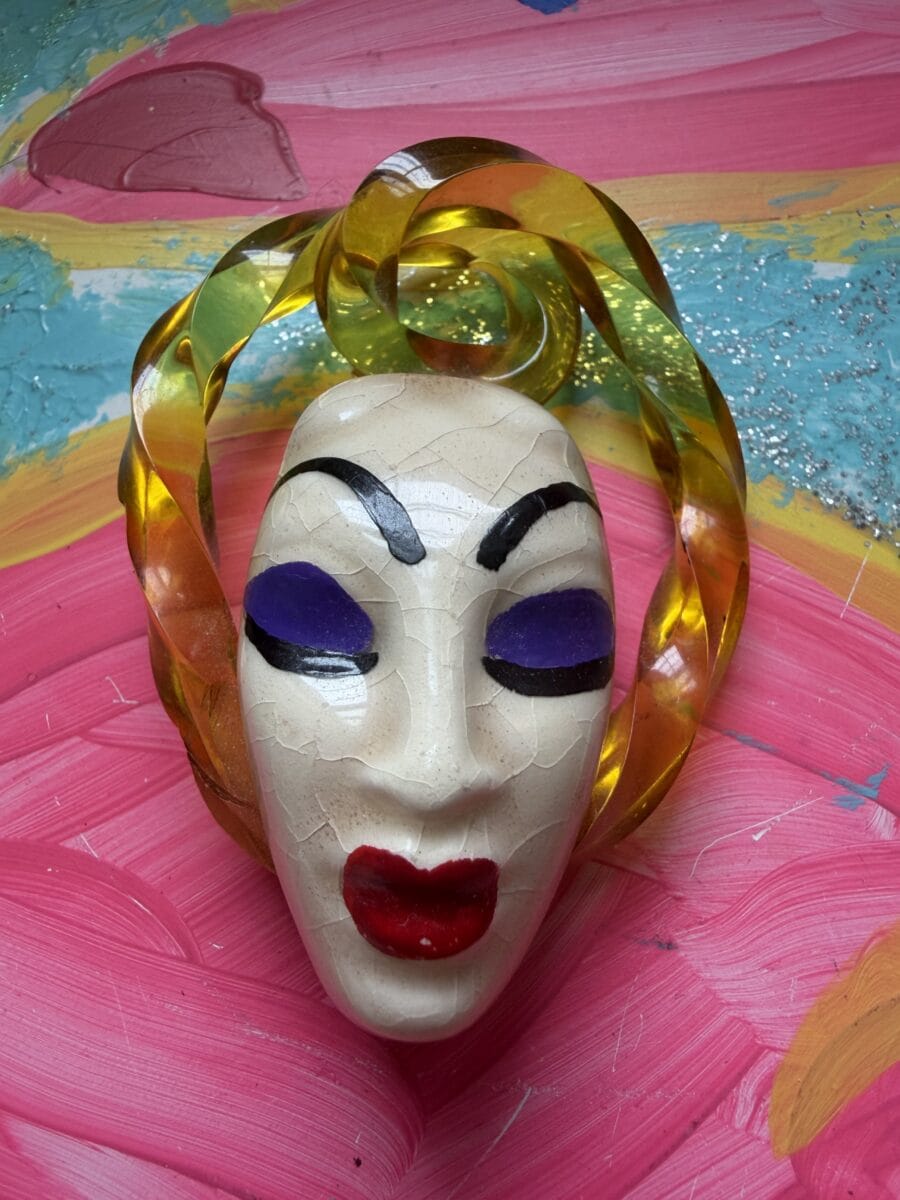
So it’s so surprise that Elzac’s Victims of Fashion face brooches are actually the mother, or not-too-distant ancestor of Barbie. Elzac of Hollywood was actually founded by the iconic Barbie creators, Ruth Handler and her husband Eliot, along with their collaborator Zac Zemby, in the fall of 1941. The designs began with animals and eventually they landed on the now iconic Victims of Fashion lady faces, inspired by 1940s performers like Carmen Miranda. The forgotten fashion designer Beatrice Weld, who was also a friend of the Handlers, is reportedly credited with creating the women’s faces. If you look closely at the Elzac Victims of Fashion, you might see that some of them also wear their own jewelry, turbans, hats and are accessorized with pizazz just like Carmen Miranda.
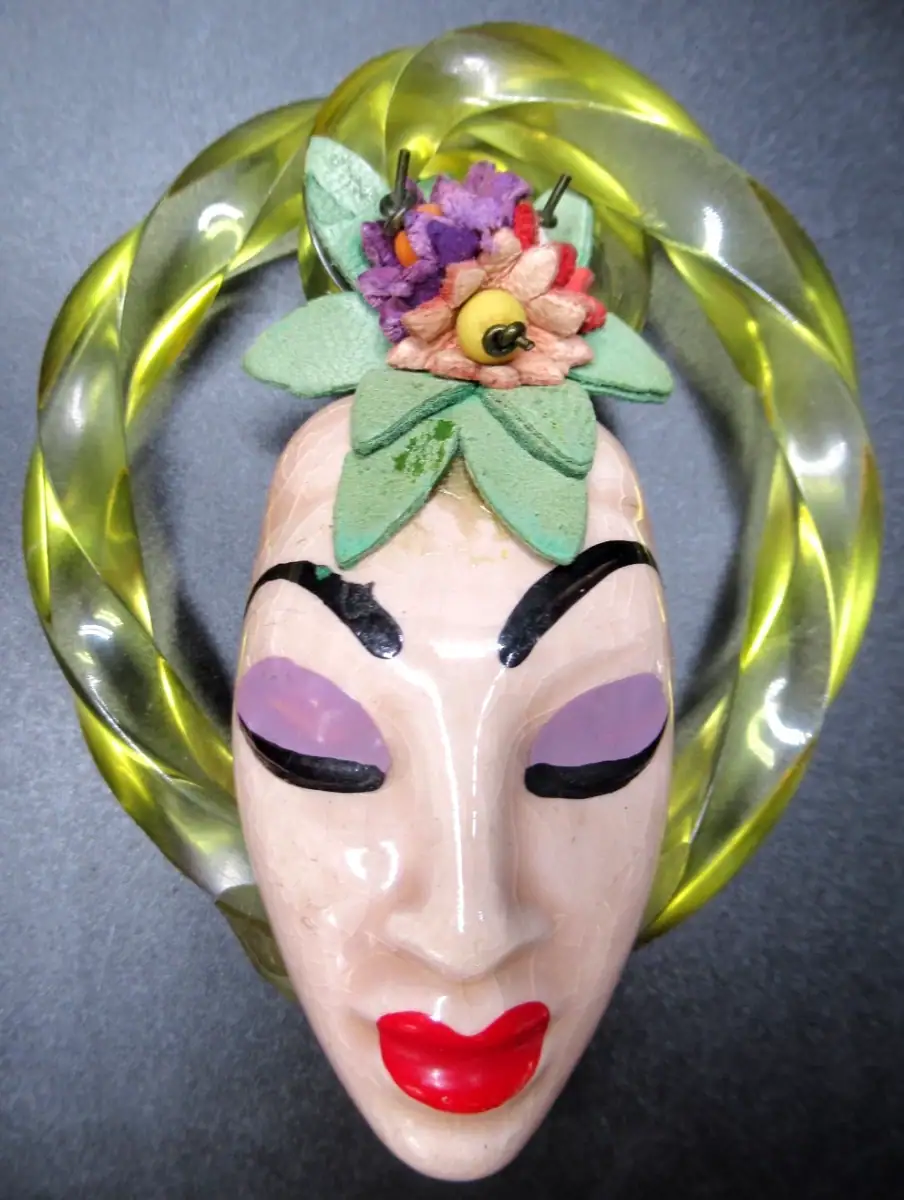
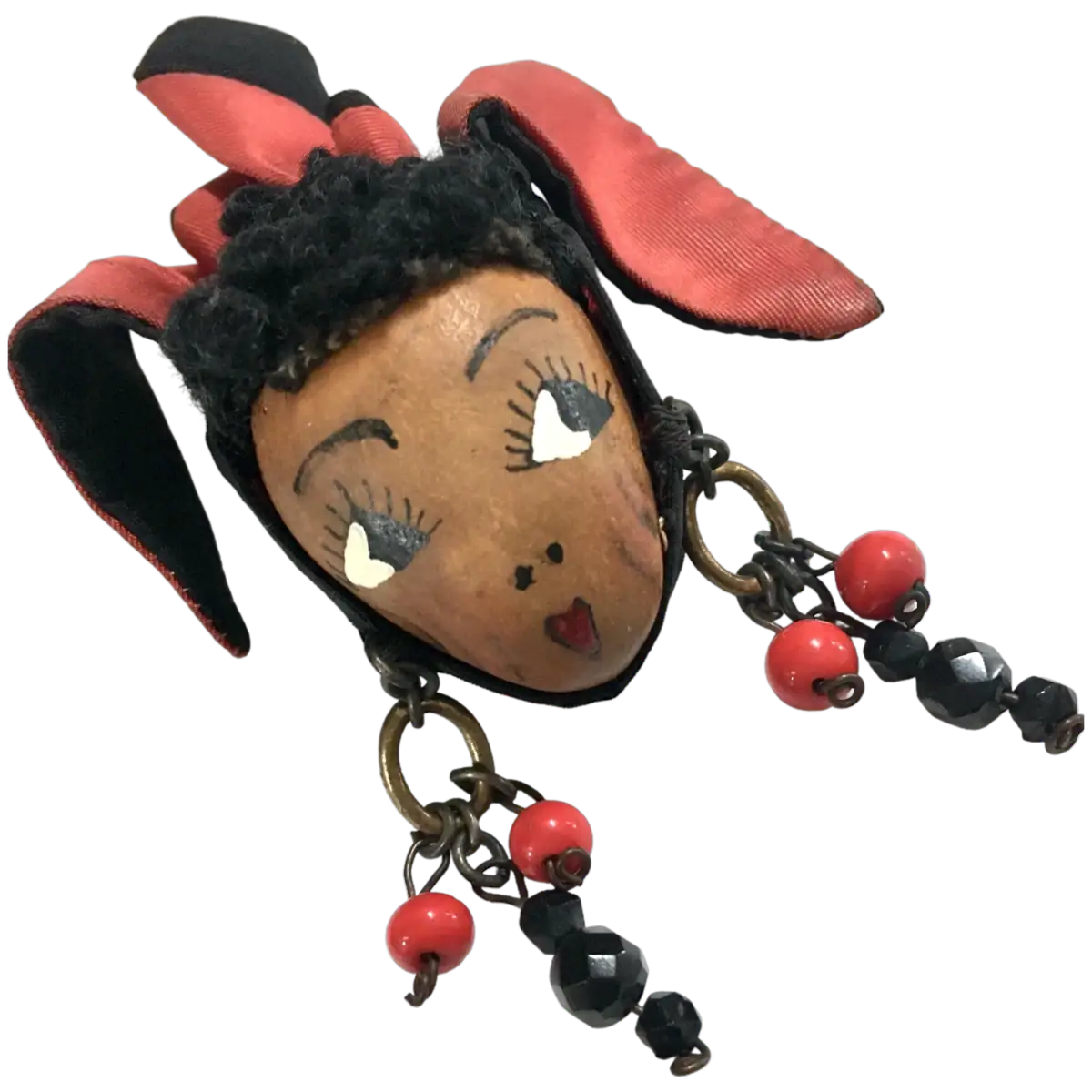
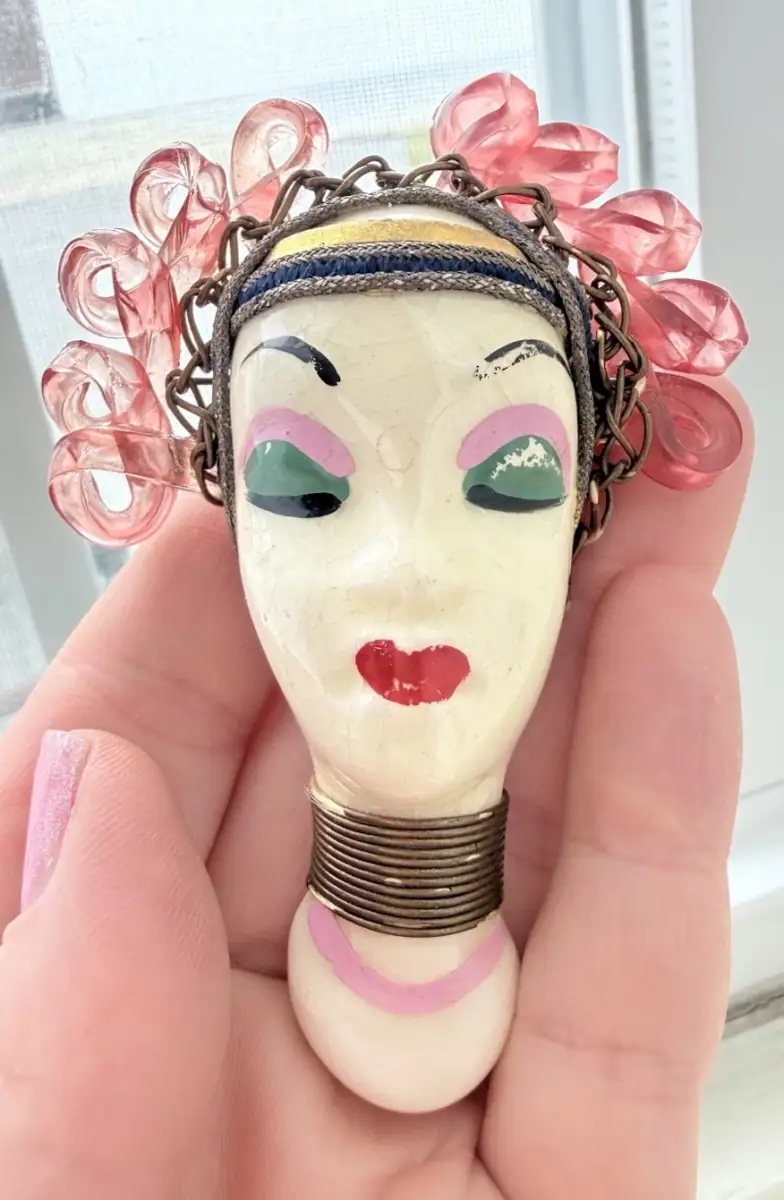
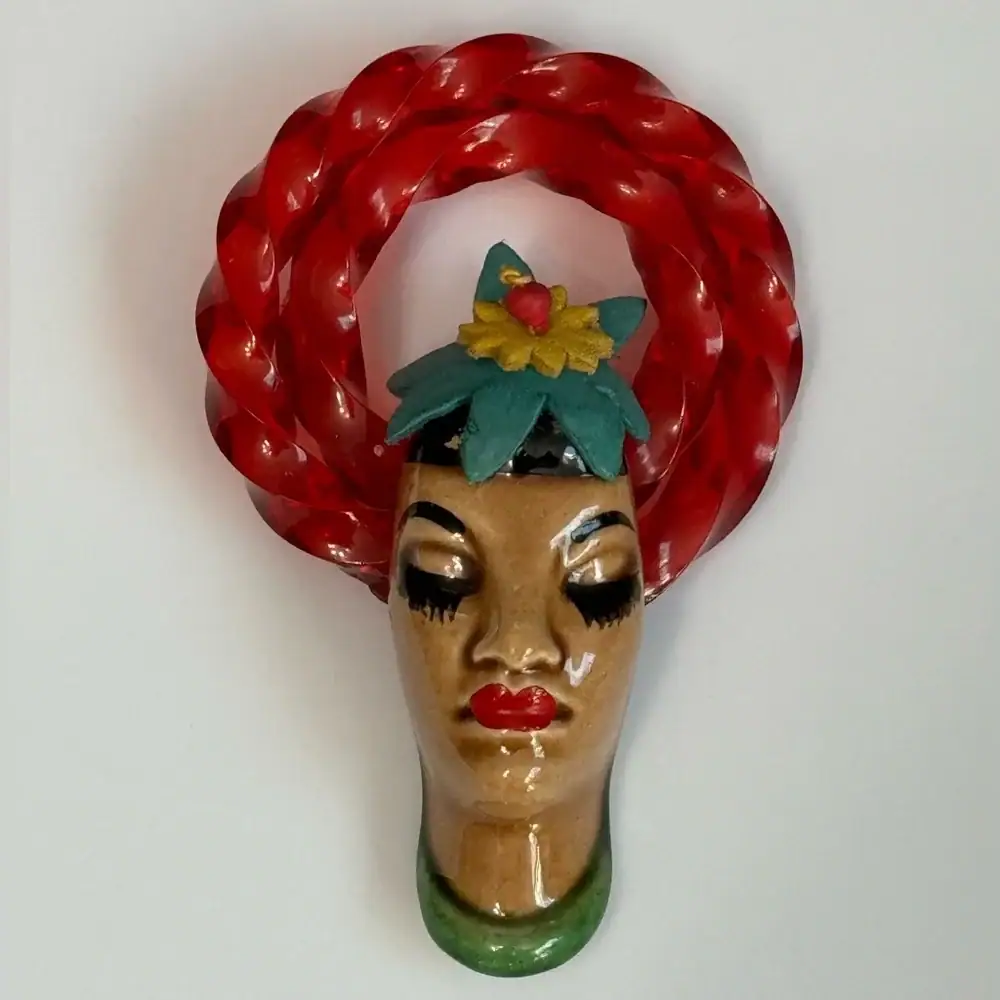
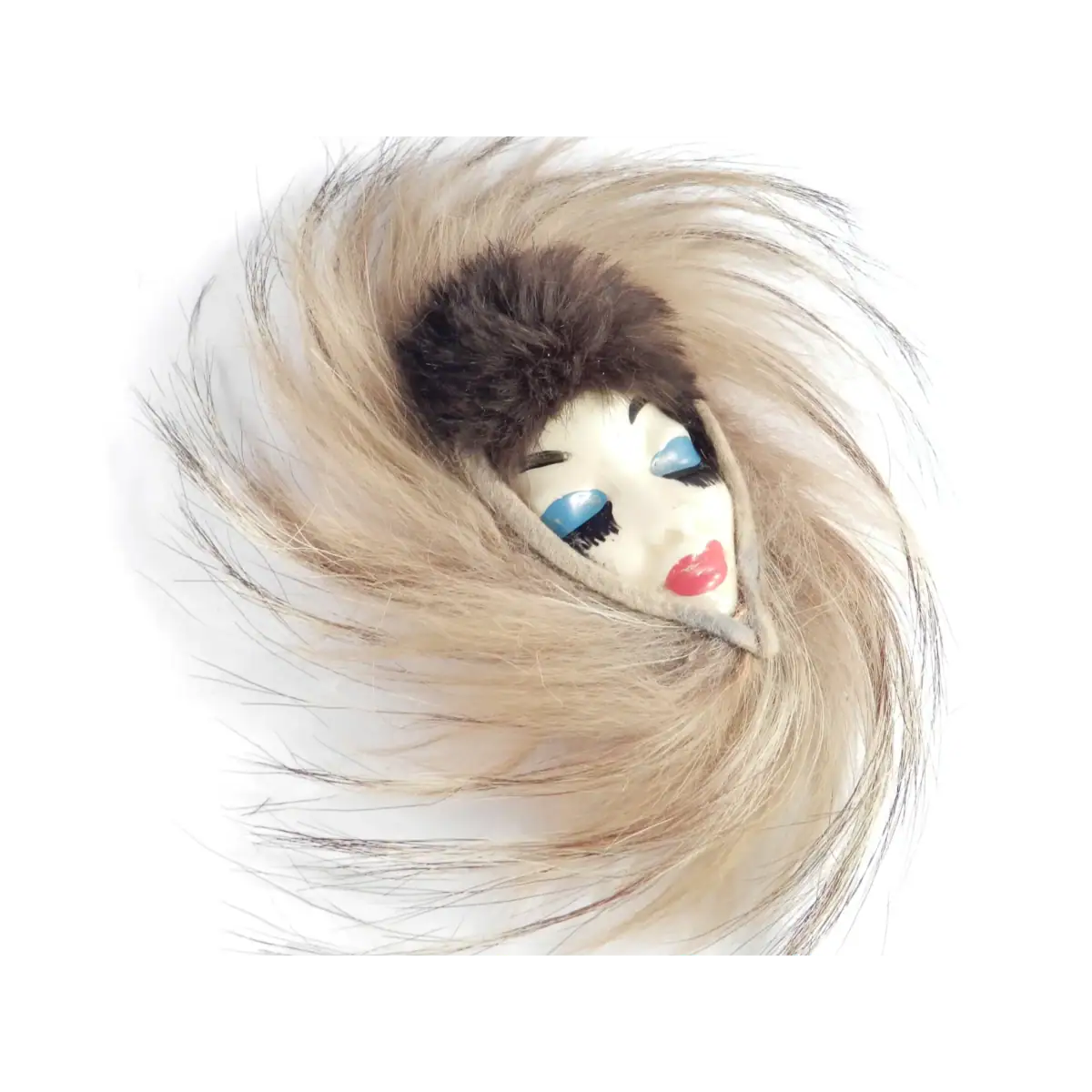
The original brooches were sold in Sears-Roebuck catalogs for as little as $1 during the early 1940s (that’s about $23 adjusted for inflation today) and were labeled as “pin-ups” in “gay, hand painted ceramics,” – the “Victims of Fashion” moniker was given to these lovely ladies by collectors later on, and it stuck. Some higher-end versions made of carved wood and ebony were sold in department stores for higher prices, fetching up to $9. In the early days, Ruth Handler sold the items herself. The brand only lasted from 1941 – 1944, and just over 15 years later, Handler debuted Barbie in 1959 at the American International Toy Fair in New York City.
Since World War II limited the use of certain materials like metal, it was an ideal time for Elzac to thrive. These pieces were made by hand in the United States, and you can see and feel the imperfections, which makes them all the more special. At its height in 1944, Elzac reportedly employed as many as 400 artisans and had manufacturing facilities on four floors, plus the basements of two adjoining buildings, complete with all the machinery and tools to also create all the custom clay silhouettes. Each piece was hand-painted. Elzac hired wood carvers, sculptors and painters to do the work. In addition to the showrooms located New York, Los Angeles, the regions of the Midwest, South, Great Lakes, and New York, these pieces were also sold in Cuba, Hawaii, and Central and South America as well. Interestingly, Elzac’s Victims of Fashion never come signed; they usually had a paper or foil tag that was removed before wear.
Still, Elzac Victims of Fashion brooches are entirely unmistakable. The rawness and realness of the human touch is so core to their design, as is the joy and freedom of expressive dressing. Over 80 years later, the faces are often cracked and crazed and the makeup is usually chipped. It’s part of their personality. The Victims of Fashion are one of the many forgotten costume jewelry treasures of the past that many people often overlook. Before Ruth Handler gave the world Barbie, she gave it Elzac, and those little lucite and ceramic victims of fashion deserve to be remembered as the first dolls she ever dressed.
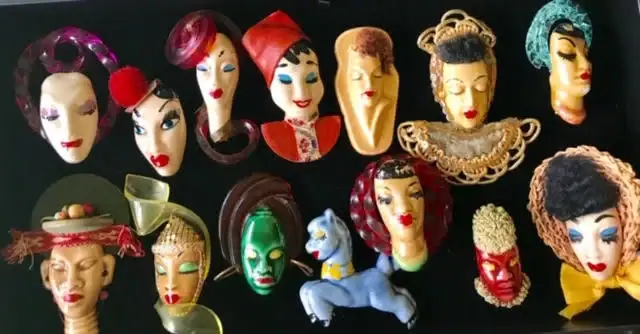
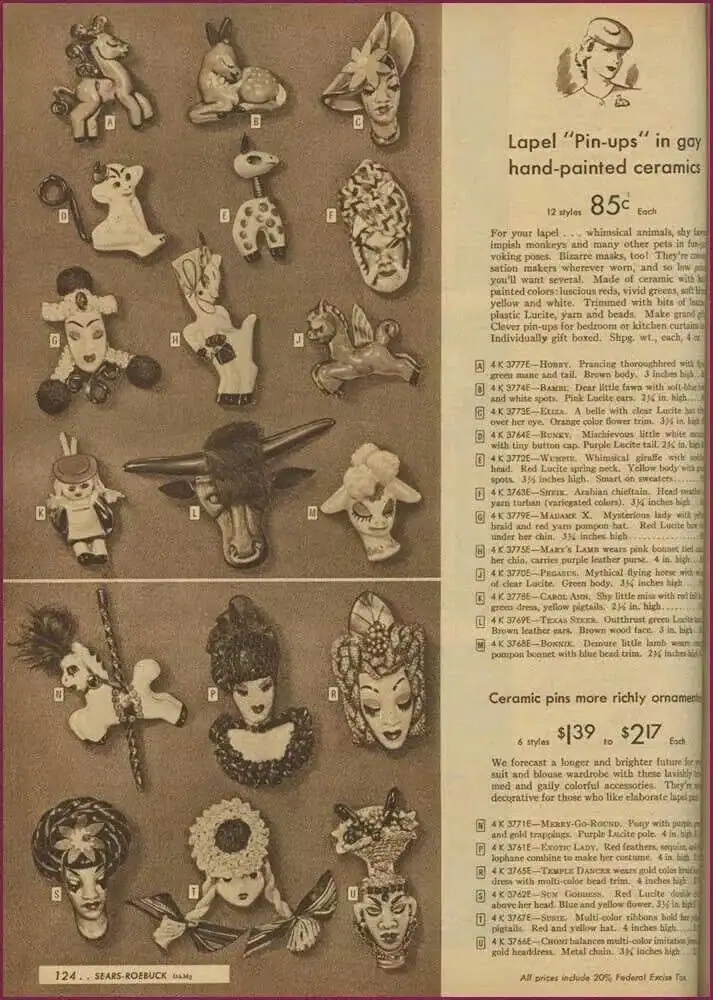
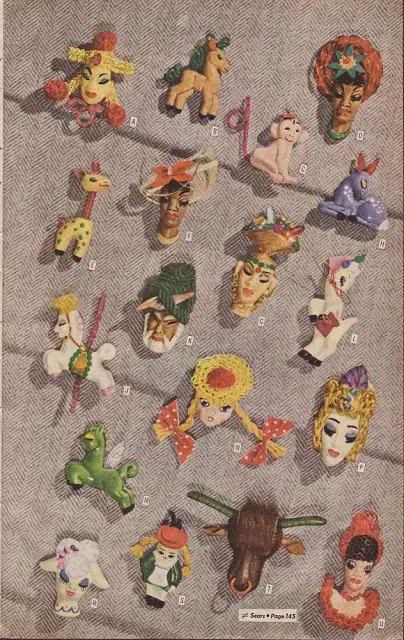
Elzac Victim of Fashion pins and original catalog scans, via Kim Loves Vintage
We use affiliate links where possible, which means we may get a small commission from things you buy.
Leave a Comment